Seoul to Busan by KTX or SRT in 2026: Booking, Stations, Maps & Travel Time
Last verified: October 10, 2026 · Source basis: Korail, SR and Seoul public transportation information
Traveling from Seoul to Busan by high-speed train is one of the easiest long-distance trips in South Korea. The route is fast, frequent, and takes you directly to Busan Station in the city center.
But there is one important 2026 change that can confuse travelers searching for “KTX vs SRT.” Since September 1, 2026, Korea’s high-speed rail system has been integrated. The former SRT trains are now operated within the KTX system, and the SRT brand has been replaced by KTX / KTX-Sancheon for regular high-speed service.
That means the practical choice for a Seoul–Busan trip is now mainly about which Seoul station is more convenient for you: Seoul Station or Suseo Station.
Source check for the 2026 booking change
Korail’s August 2 announcement identifies the August 3 Korail+ launch and September 1 integrated services. It says integrated tickets are available through Korail+ and the Korail website. Reviewed October 24, 2026.
Choose Seoul or Suseo by the departure station on the actual service you select. The booking change does not make those stations interchangeable. Check the station-to-hotel journey before comparing train departure times.
Quick answer: Seoul to Busan by high-speed train
| Option | Departure station | Arrival | Typical trip time | Best for |
|---|---|---|---|---|
| KTX | Seoul Station | Busan Station | About 2 hr 20 min–3 hr, depending on stops | Central Seoul, Myeongdong, Hongdae, airport-rail travelers |
| KTX / former SRT route | Suseo Station | Busan Station | About 2 hr 10 min–2 hr 50 min, depending on stops | Gangnam, Jamsil, southeast Seoul |
Current Korail and SR notices show both Seoul Station–Busan and Suseo–Busan direct services. Exact times change by train and date, so always search your actual travel date before planning around a specific departure.
Important 2026 update: what happened to SRT?
Until August 2026, many travelers thought of the two systems separately:
- KTX — mainly Seoul Station
- SRT — mainly Suseo Station
That changed on September 1, 2026. Korail announced an integrated high-speed rail operation, and the former SRT trains were incorporated into the KTX system. The SRT rolling stock is now identified as KTX-Sancheon.
For travelers, the biggest practical change is simple:
You can now search and book both Seoul Station and Suseo Station departures through Korail’s integrated booking system, including the Korail+ app.
If you find older travel blogs telling you to use the SRT app separately for Suseo, that advice is outdated for travel after September 1, 2026.
Which Seoul stations can you use for a direct train to Busan?
For a straightforward high-speed trip from within Seoul city, the two stations you should compare are:
- Seoul Station — the main KTX hub in central Seoul
- Suseo Station — the high-speed rail hub in Gangnam, formerly associated with SRT
Yongsan Station is also a major KTX station, but in the current timetable it is mainly associated with Honam and Jeolla services rather than the standard direct Busan route. Do not assume that your Busan train will leave from Yongsan unless it appears in your live Korail search.
Gwangmyeong Station also serves Busan-bound KTX trains, but it is in Gyeonggi-do, not Seoul. This article focuses on stations physically inside Seoul.
1. Seoul Station: best for central and west Seoul
Seoul Station is the most familiar departure point for KTX trains to Busan. It is especially convenient if you are staying in Myeongdong, Jongno, Hongdae, Yongsan, or arriving from Incheon Airport via AREX.
Address: 405 Hangang-daero, Yongsan-gu, Seoul
Connected rail and subway:
- Seoul Subway Line 1
- Seoul Subway Line 4
- Airport Railroad AREX
- Gyeongui-Jungang Line
- GTX-A
Open Seoul Station in Google Maps · Open Seoul Station in NAVER Map
Who should choose Seoul Station?
- You are staying around Myeongdong, City Hall, Jongno or Yongsan.
- You are coming from Incheon Airport on AREX.
- You are staying near Hongdae and want a direct rail connection to Seoul Station.
- You want the largest selection of traditional Seoul-origin KTX departures.
2. Suseo Station: best for Gangnam and southeast Seoul
Suseo Station is in Gangnam-gu and is often much more convenient than Seoul Station if you are staying in Gangnam, Jamsil, Songpa, COEX or southeastern Seoul.
Before September 2026, this was known primarily as the SRT terminal. After high-speed rail integration, Suseo departures are booked as KTX services through the Korail system.
Location: Suseo-dong, Gangnam-gu, Seoul
Connected rail and subway:
- Seoul Subway Line 3
- Suin-Bundang Line
- GTX-A
The high-speed rail platforms are directly connected to the subway station through the station complex.
Open Suseo Station in Google Maps · Open Suseo Station in NAVER Map
Who should choose Suseo Station?
- You are staying in Gangnam or Songpa.
- You are near Jamsil, COEX, Samseong or southern Seoul.
- Taking Line 3, Suin-Bundang Line or GTX-A to Suseo is easier than crossing the city to Seoul Station.
- You want to compare more departure times now that Suseo and Seoul services are searchable together.
Seoul Station vs Suseo Station: which is better?
| If you are staying near… | Usually easier station |
|---|---|
| Myeongdong / City Hall / Jongno | Seoul Station |
| Hongdae | Seoul Station via AREX |
| Incheon Airport | Seoul Station is convenient via AREX |
| Gangnam | Suseo Station |
| Jamsil / Songpa | Suseo Station |
| COEX / Samseong | Suseo Station is usually more convenient |
Do not choose solely by train travel time. A 10-minute faster train is not necessarily better if it takes you 45 extra minutes to cross Seoul to reach the station.
Seoul to Busan travel time: calculate the whole transfer
Planning additions checked November 24, 2026 (KST).
A train’s displayed journey time ends at Busan Station. For a hotel in Haeundae or Gwangalli, budget the onward trip before committing to an attraction reservation.
Worked planning example, not a measured route: 30 minutes from your hotel to the departure station + 20 minutes to find the platform and board + a selected 2-hour-40-minute train + 60 minutes for the onward trip = 4 hours 30 minutes. Replace every input with your actual route and departure. This explains why a nominally short train ride can use most of a morning.
When should you compare a bus or flight?
| Option | Check before choosing | Costs easy to miss |
|---|---|---|
| High-speed rail | Exact departure station, train time and the journey beyond Busan Station | Local transport at both ends |
| Intercity or express bus | Both terminal names, scheduled arrival and road conditions; a Busan bus terminal is not Busan railway station | Travel from the arrival terminal to your hotel |
| Flight | Airport pair, airline check-in deadline, security and baggage collection | Checked baggage if excluded, plus both airport transfers |
Use Gimhae Airport transfers for the flight option and Busan Station transfers with luggage for rail. Choose against the same hotel-to-hotel start and finish points. Save your confirmed ticket before booking a tightly timed activity.
How long does the train itself take?
There is no single travel time because trains make different numbers of stops.
Recent official 2026 schedules include examples such as:
- Suseo 09:00 → Busan 11:11: about 2 hours 11 minutes
- Suseo 16:52 → Busan 19:33: about 2 hours 41 minutes
- Seoul 16:59 → Busan 19:47: about 2 hours 48 minutes
Faster trains skip more intermediate stations. Slower high-speed services may stop at places such as Gwangmyeong, Cheonan-Asan, Osong, Daejeon, Gimcheon-Gumi, Dongdaegu, Gyeongju and Ulsan.
For planning purposes, allow roughly 2 hours 10 minutes to 3 hours for a direct high-speed trip, then check the exact train you are booking.
How much does a ticket cost?
Since September 2026, Korail says high-speed rail fares were reduced to approximately the previous SRT fare level, an average reduction of around 10% compared with the previous KTX pricing.
A recent official SR notice uses KRW 52,600 as the reference base fare for Suseo–Busan. Seoul–Busan fares are also generally in the low KRW 50,000 range for standard-class high-speed travel, but the exact fare can vary by train type, stop pattern, seat class and discount.
Always treat the fare shown in Korail+ or the Korail website at the time of booking as the final price.
How to book Seoul to Busan in 2026
Option 1: Korail+ app
For travel after September 1, 2026, the most important booking app is Korail+, the integrated high-speed rail app.
- Open the Korail+ app.
- Set your departure station to Seoul or Suseo.
- Set the destination to Busan.
- Select your travel date and preferred time.
- Compare the available direct trains.
- Check departure station carefully before payment.
- Select your seat or seat class when available.
- Pay and save the mobile ticket in the app.
Because Seoul Station and Suseo Station are on opposite sides of the city, double-check the departure station after booking. “Seoul” and “Suseo” are not interchangeable.
Option 2: Korail website
International travelers can also use Korail’s online reservation service. Search:
Departure: Seoul or Suseo → Arrival: Busan
The English reservation site is useful if you prefer to book from a computer before arriving in Korea.
Korail English reservation page
Option 3: Station ticket counter or vending machine
You can also buy tickets at major railway stations. This can be useful if you have trouble with an international payment card online, but popular Seoul–Busan trains can sell out, especially on Friday evenings, weekends and holidays.
If your travel date is important, reserving in advance is safer than arriving at the station and expecting a seat.
What about the old SRT website and app?
Official SR notices say that the separate SRT reservation service ended with the high-speed rail integration from September 2026. For current travel, use Korail+ or the Korail website for Suseo departures.
Some older SRT pages may still appear in search results, and the SRT website may remain online for legacy ticket lookup or information. That does not mean you should use old booking instructions for a new 2026 trip.
Train or flight? Compare the complete hotel-to-hotel journey
For a Seoul–Busan trip, compare the total journey rather than a train time with a flight time. The rail and air options start and finish in different places.
| Include in your comparison | Rail | Flight |
|---|---|---|
| Before departure | Hotel-to-station route, platform access and a sensible boarding buffer | Hotel-to-airport route, airline check-in deadline, security and boarding |
| After arrival | Busan Station to your accommodation | Gimhae Airport to your accommodation, plus baggage collection if applicable |
| Price comparison | Train fare plus local transfers | Airfare, any baggage charges and airport transfers |
| When plans change | Operator’s change and refund rules for your fare | Airline’s change and refund rules for your fare |
There is no fixed winner for every hotel and departure time. Search your actual date, confirm the station or airport, and compare the final payable price. For local connections, use the NAVER Map guide. This checklist does not establish live flight availability or a guaranteed journey time.
Tips for choosing the best train
- Search both Seoul and Suseo. The closest station may save more time than choosing the fastest train.
- Check total door-to-door time. Include your hotel-to-station journey.
- Book weekends early. Seoul–Busan is one of Korea’s busiest rail routes.
- Arrive at least 15–20 minutes early. Large stations can take time to navigate.
- Keep your mobile ticket accessible. You may need to show it during inspection.
- Use NAVER Map for station access. It is useful for subway exits and real-time local transit.
If the Seoul-to-Busan train you want is unavailable
Practical additions researched October 30, 2026.
- Check sale status. Compare the date with the ordinary booking window and current operator notices. A grey calendar date alone does not prove that seats are sold out.
- Broaden the search. Check the station pair, departure-time filters and other useful services. Compare Seoul Station and Suseo only where the displayed train and station access work for you.
- Read the ticket type. A reserved seat, a standing/unreserved product and a partly seated itinerary are different conditions. Buy only a valid product offered for that service.
- Compare the complete alternative. For a bus or flight, include access to the departure terminal and transport from the arrival terminal to your hotel.
- Resolve uncertain payment first. Check your existing booking and bank record before paying another seller.
Use the bus-ticket guide to identify the right terminal and channel. Do not assume that a bus sold as “Busan” arrives at Busan railway station, or that a station counter can produce seats for every sold-out train. If you choose separate connecting tickets, check the transfer and each ticket’s cancellation conditions rather than assuming a protected connection.
On arrival, keep the first meal and activity near the confirmed accommodation if travel takes longer than expected. Choosing one usable sightseeing area is more practical than treating the station, Gamcheon and Haeundae as one compact neighbourhood.
What happens when you arrive in Busan?
Most high-speed trains arrive at Busan Station, which is connected to Busan Subway Line 1. From there you can continue toward areas such as Nampo, Seomyeon, Gwangalli or Haeundae by subway, bus or taxi.
If your hotel is in Haeundae, remember that Busan Station and Haeundae are not next to each other. Add local transfer time when planning your arrival.
Frequently asked questions
Can I still take SRT from Suseo to Busan?
The route still exists, but after the September 2026 integration the former SRT service is operated and sold within the KTX system. Search Suseo–Busan in Korail+.
Is Seoul Station or Suseo Station faster to Busan?
Train time varies by service. The better station usually depends on where you are staying in Seoul. Compare both train time and the time needed to reach the station.
Can I board a Busan KTX at Yongsan Station?
Yongsan is a major KTX station, but it is not the standard departure point for current Seoul–Busan high-speed services. Search the live timetable rather than assuming a Busan train will stop there.
Can I buy a ticket on the day?
Yes if seats are available, but Seoul–Busan trains can sell out at busy times. Advance booking is recommended for weekends and holidays.
Should tourists book through a third-party website?
The safest reference for schedules and fares is Korail’s own reservation system. Third-party services can be convenient, but compare fees and ticket conditions before paying.
Related Korea Practical Guide articles
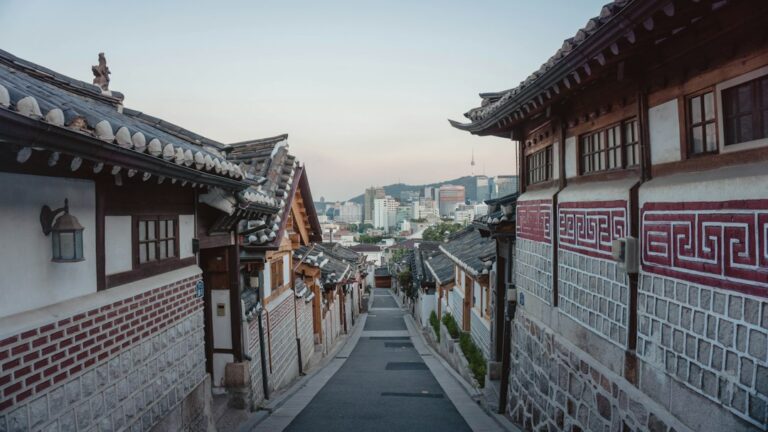
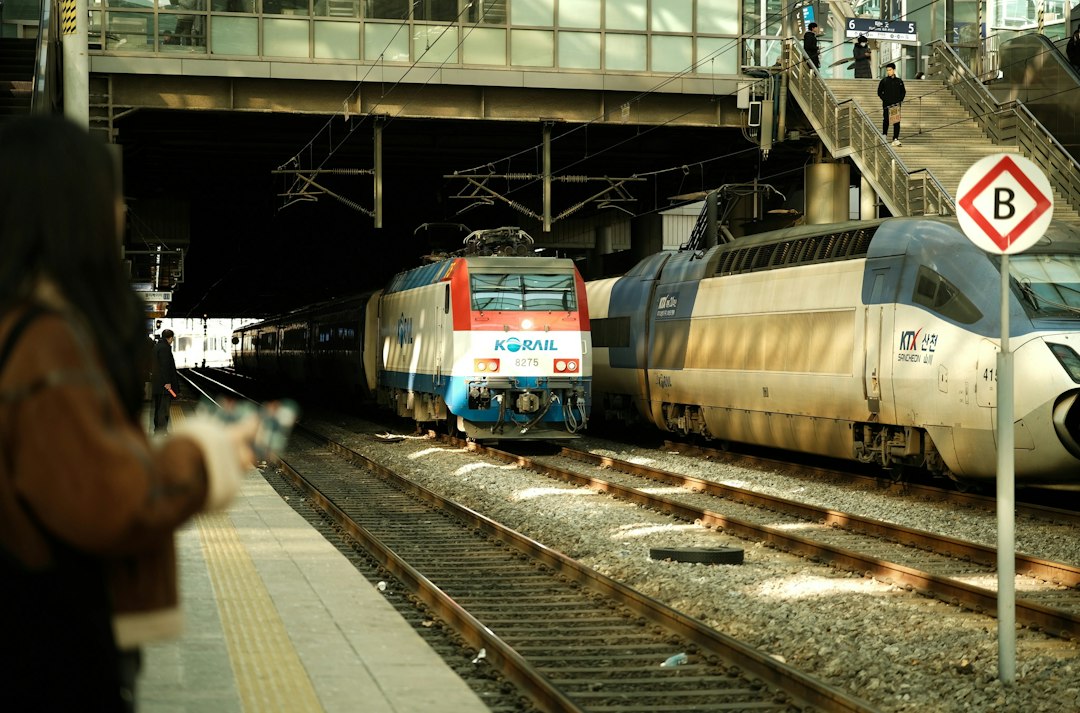
Featured photo: arcticworks / Unsplash. The image shows Seoul Station and is illustrative of rail travel.
Primary and official sources
- Korail — High-speed rail integrated operation from September 2026
- Korail — Korail+ integrated app and booking changes
- SR — High-speed rail integration booking Q&A
- Korail/SR — Current 2026 timetable adjustment examples
- Korail — English reservation
Korea Practical Guide is an independent information website and is not affiliated with Korail, SR, Seoul Metropolitan Government or any railway operator.