KTX Sold Out? Booking Dates, Ticket Options and Alternatives
If you cannot book a KTX train, first identify the problem: the date may not be on sale, your search may exclude suitable departures, seats may be sold out, or payment may have failed. Each needs a different response. A grey date or an empty result alone is not enough to diagnose a sold-out train.
Researched October 30, 2026; advance-booking rule updated November 5, 2026. This is a troubleshooting guide, not a live inventory check. Booking windows, holiday releases, ticket types and payment options must be checked in the current official channel for your travel date.
Start with the screen you are seeing
| What you see | What to check | Next action |
|---|---|---|
| Date cannot be selected | Ordinary sales window, special release notice, timetable change or interface issue | Read the current operator notice before concluding there are no seats |
| No trains returned | Station names, date, time, filters and whether the route operates | Broaden the time and search the exact station pair |
| Specific services shown as sold out | Other times, seat categories and suitable departure stations | Compare available alternatives and the complete journey |
| Card rejected at checkout | Whether payment was approved and a ticket issued | Check reservations and bank status before retrying |
| Bank alert but no ticket | Possible pending authorisation or an incomplete booking | Retrieve the booking in the same channel or contact support |
| Third-party site has no tickets | Its inventory and booking process may differ | Check the official channel without assuming either result guarantees a seat |
1. Check whether the date is on sale
The ordinary advance-booking period was extended from one month to two months on October 1, 2026. The Ministry of Land, Infrastructure and Transport’s September 20 announcement confirms the change. Older “one month” or “30 days” advice should not be used as the current rule. Search your travel date on Korail’s official foreign-language website, then check the operator’s notice for the exact release time and exceptions. Two calendar months are not always 60 days.
For Seollal, Chuseok or a timetable change, a separate announcement can override the ordinary pattern. Do not reuse last year’s holiday release date. Read which travel dates are covered, who can use a particular release channel, whether membership is required, and the payment deadline. A saved reservation that is not paid within its conditions is not the same as a paid ticket.
A documented example of an exception: Korail’s August 2, 2026 announcement said sales for the September integration would open on August 5 at 10:00. This historical example explains why an ordinary countdown can fail; it is not the release rule for your next journey.
2. Reset the search before changing the whole trip
- Confirm the departure and arrival stations, including the Korean names.
- Check the local travel date and time, especially if planning from another time zone.
- Remove narrow departure-time or train-type filters where the interface allows.
- Check an earlier and later part of the same day.
- Search another station only if you can actually reach it and the displayed train serves your destination.
- Compare the result on the current official website or app, then read any service notice.
For Seoul–Busan: Seoul Station and Suseo are separate places. Search the useful departures available for your date, then add the time to reach the station from your accommodation. A train leaving later from a distant station may not improve the door-to-door journey.
Our Seoul-to-Busan route guide covers the station choice, while the Korail+ guide explains the 2026 booking transition. Older advice about separate KTX and SRT systems should be checked against current operator instructions.
3. If the train you want really is sold out
Look for an earlier or later service, another available seat category, or a slower service that is actually listed for the route. Recheck official availability if your plans are flexible, since inventory can change. Do not rely on a prediction that a cancellation will appear.
Changing the search to several smaller passenger groups can reveal whether the original group size is the constraint, but book split services or seats only if the result is suitable for everyone. In particular, do not create a plan that leaves children or travellers needing assistance separated without the arrangements your group requires.
Ask a staffed station counter about legitimate ticket options if you cannot interpret the result. A counter is a place to get clarification, not a guaranteed source of seats hidden from the website.
Standing, unreserved and partly seated tickets
These labels describe different travel conditions. If a current official channel offers such a ticket, read where and when you have a seat, whether you may need to move, and the restrictions for that service. A ticket that has a seat for part of the journey is not a full-journey reserved seat.
Do not board a reserved train without a valid ticket on the assumption that you can simply stand and pay later. Do not assume standing tickets are offered during every holiday period. Confirm availability and conditions with the operator before choosing this as a backup.
4. If payment failed, diagnose payment separately
Korail’s foreign-traveller booking guidance documents overseas-issued card support on its foreign-language website. It does not mean every issuer, card or transaction will be approved, or that every machine has the same capability.
- Look for the reservation or issued ticket in the channel you used.
- Check whether the bank shows a completed charge, a pending authorisation or a rejection.
- Complete a genuine issuer authentication request if one is required.
- If appropriate, try a supported alternative card or the official foreign-language web channel.
- If a charge or reservation is unclear, contact the seller before buying again elsewhere.
Never guess a PIN, share a one-time bank code with a stranger, or use another traveller’s workaround as proof of a supported payment method. Our foreign-card troubleshooting guide helps separate issuer, terminal and checkout issues.
5. Compare alternatives using the whole journey
| Alternative | Check before booking |
|---|---|
| Another train or departure station | Station access, actual arrival time, transfers and ticket conditions |
| Slower rail service | Whether the service operates on your route, its duration and available ticket |
| Express or intercity bus | Exact terminals, departure, luggage conditions, traffic exposure and last local connection |
| Domestic flight | Airport access, check-in, baggage, onward transport and the total fare |
| Change the travel day or stay order | Accommodation cancellation terms and any fixed event or connection |
BusTago’s official English site provides intercity-bus searching and terminal selection. Different routes use different booking systems. Start with the exact route and terminal rather than assuming all buses leave from “Seoul Station” or arrive beside Busan’s railway platforms. Our Korean bus-ticket guide covers the available channels.
Check arrival after dark as carefully as departure. A bus or flight that arrives after local transport ends can add another booking, delay or taxi cost. Compare the complete trip rather than the headline ticket price.
Connections and separate tickets need a buffer
If you choose a connection or independently purchased segments, allow for the station layout, transfer and possible delay. Check whether the booking is sold as a protected connection or consists of separate tickets; do not assume one seller will replace a missed onward booking. Avoid a plan where you have to change trains faster than your group can manage with bags.
For an international flight arrival, clear immigration and collect bags before relying on a tightly timed rail departure. A later train with a realistic buffer may be a better choice than a faster itinerary that works only if every step is immediate.
Useful questions at the station
| Korean | Meaning |
|---|---|
| 이 날짜 승차권은 아직 판매 전인가요, 매진인가요? | Are tickets for this date not on sale yet, or sold out? |
| 부산까지 가는 다른 시간대 열차가 있나요? | Are there trains to Busan at another time? |
| 이 표는 전 구간 좌석이 지정되어 있나요? | Does this ticket have a reserved seat for the whole journey? |
| 예약과 결제가 완료되었는지 확인해 주세요. | Please check whether my reservation and payment are complete. |
Frequently asked questions
Does a rail pass guarantee a place on a sold-out train?
Do not assume so. Check current pass eligibility, covered services, reservation requirements and the conditions of any alternative ticket type. A pass purchase is a separate decision from finding a suitable train.
Will a reseller definitely have tickets when Korail is sold out?
No guarantee follows from a search result or a reservation request. Check the exact service, issuance status, total price and cancellation terms before paying.
Should I keep two tickets just in case?
If you deliberately book a backup, understand both cancellation deadlines and fees, then release the unwanted ticket through its original seller. First check that a failed payment did not already create another booking.
Sources and update notes
Sources checked October 30, 2026: Korail’s foreign-language website, the linked Korail announcements and BusTago’s English booking interface. The August 2026 release is a dated example; holiday rules and future availability require a fresh operator check. No tickets were purchased for this article. Booking-period correction checked November 5 against the Ministry’s announcement and government policy guidance.
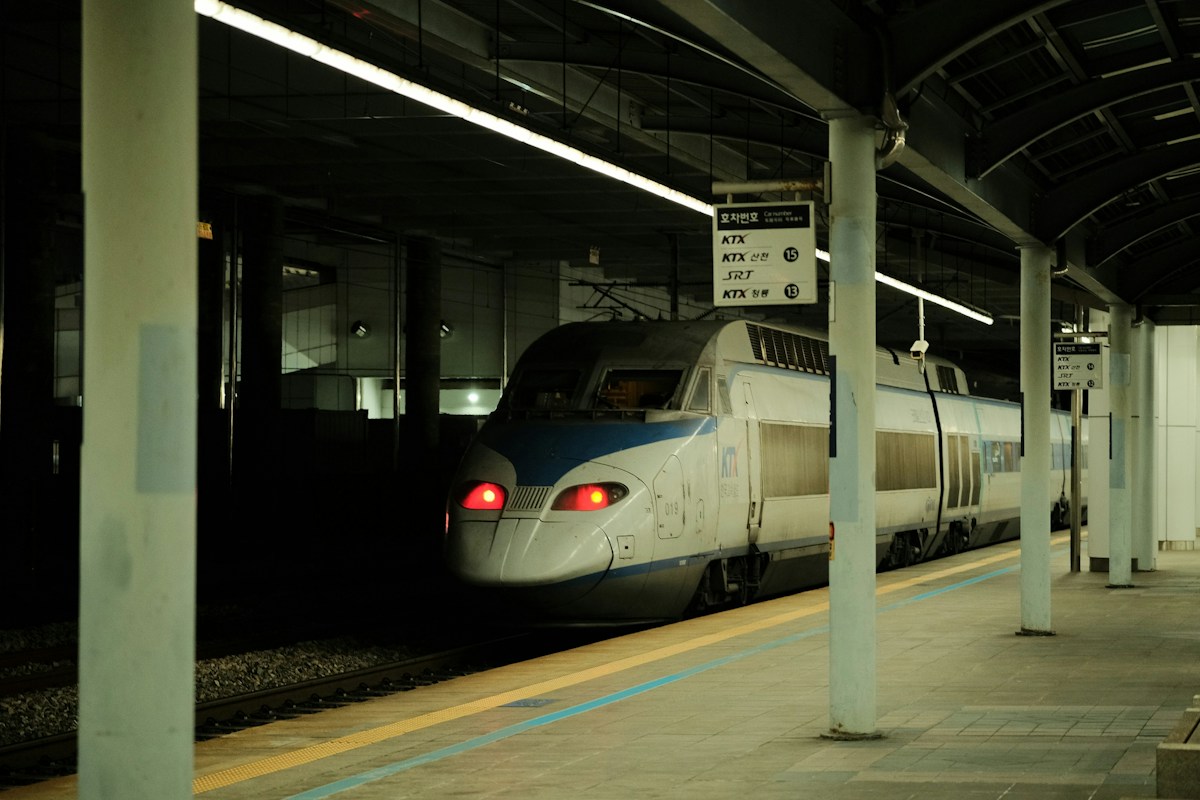
Featured photograph: arcticworks / Unsplash, Daejeon Station. The photograph illustrates rail travel and does not show live ticket availability.