Korean Restaurant Hours: Break Time, Last Order and Early Meals
A Korean restaurant’s closing time is not necessarily its last time to accept an order. Check opening hours, break time and last order separately, then allow for travel and any queue. A place shown as open until 21:00 may stop taking food orders well before that.
Reviewed November 24, 2026. Example schedules below teach you how to read the information; they are not standard hours for Korea. Named tourism listings are cited as published examples and should be reconfirmed for a visit.
Five parts of a restaurant schedule
| Label | Meaning | What it changes for your visit |
|---|---|---|
| 영업시간 | Business hours | The broad operating window; still read the exceptions |
| 브레이크타임 | Break between services | A period when ordinary meal service may stop |
| 라스트오더 / 주문 마감 | Last order / orders close | The deadline to place an eligible order, which can precede closing or a break |
| 정기휴무 / 휴무일 | Regular closure / day closed | A weekly or other scheduled day off |
| 재료 소진 시 마감 | Closes when ingredients run out | The posted clock time is not a guarantee that the dish remains available |
Also watch for 평일 (weekdays), 주말 (weekends), 공휴일 (public holidays) and 임시휴무 (temporary closure). If a restaurant has different services on different floors or a bar alongside its kitchen, ask which timetable applies to the food you want.
Read a sample schedule from start to finish
Suppose a fictional restaurant displays:
11:00–21:00 / Break 14:30–17:00 / Lunch last order 14:00 / Dinner last order 20:00
- Arriving at 14:15 can be too late to order lunch, even though the break does not start until 14:30.
- Arriving at 16:30 puts you inside the service break.
- Arriving at 20:30 can be too late to order dinner, even though the premises close at 21:00.
- A 13:50 arrival with a queue is not a reliable lunch plan; being in line may not mean your order has been accepted.
This pattern is not hypothetical in principle. KTO’s Yujin Sikdang listing separately publishes business hours, a break, and lunch and dinner order cutoffs. Use the listing to see the distinctions, then check the restaurant for its current schedule.
There is no single nationwide break time
Restaurants set their own schedules. Some listings separate lunch and dinner; others describe longer continuous operation, different weekday and weekend breaks, or early opening. A statement such as “nothing is open from 3 to 5” is too broad to plan around.
For a documented example of variation, KTO’s Jalppajin Memil Ikseon listing gives different weekday and weekend break periods. Its Imun Seolnongtang listing includes morning opening and a separate afternoon break. These examples demonstrate how schedules differ, not a recommendation to arrive without reconfirming.
How to check before crossing the city
- Open the exact branch. Compare the Korean name and address rather than relying on a chain name.
- Choose the right day. Check weekday, weekend and holiday conditions for your actual date.
- Read all schedule fields. Expand the hours if necessary and look for a break and order cutoffs.
- Check recent notices. The restaurant’s official channel may announce temporary closure or a service change.
- Compare with your expected arrival. Add the final walk and queue risk to the journey.
- Ask if the meal is important or the timing is tight. Confirm whether staff can still accept a new order when you expect to arrive.
A map’s “Open” badge is a useful starting point, but it may not tell you whether the kitchen can serve you. A reservation for a specific service is clearer than assuming the general hours include an available table. See our restaurant reservation guide for booking and waitlist differences.
Where to start looking for an early breakfast
Build breakfast into the accommodation decision if it matters to you. Check the hotel’s breakfast hours, whether your rate includes it and whether the food suits your needs. For an outside meal, search for the actual time you need and confirm the selected branch’s kitchen opening.
Useful searches include the neighbourhood plus 아침식사 (breakfast), 조식 (breakfast service), or a dish you want. A café opening time does not guarantee a hot-food kitchen opens at the same time. Save two options for a jet-lagged morning rather than assuming a dinner restaurant is also an early breakfast venue.
Our early-morning coffee guide for Myeongdong and Hongdae is a starting point for drinks; verify food availability separately.
What to do if you need lunch during a break
Search nearby for a place whose current information indicates service at that time, then check its last order. Individual-meal counters, food courts, cafés with meals and convenience stores are options to investigate; none should be assumed to serve every menu item continuously.
If you are already at a closed restaurant, choose between waiting for the next service and using your backup. Check whether the reopening time is firm, whether the queue restarts and whether your next booking leaves enough room for a meal. Travelling to another neighbourhood for food can cost more time than changing the type of meal.
Questions to ask by phone or show at the door
| Korean | Meaning |
|---|---|
| 오늘 브레이크타임이 있나요? | Is there a break time today? |
| 점심 주문은 몇 시까지 받으세요? | Until what time do you accept lunch orders? |
| 지금 식사 주문할 수 있나요? | Can we order a meal now? |
| 오후 두 시에 도착하면 식사할 수 있나요? | If we arrive at 2 p.m., can we eat? |
| 마지막 입장은 몇 시인가요? | What time is the last admission? |
| 이 메뉴는 지금 주문 가능한가요? | Can we order this menu item now? |
State the number of guests and the specific dish when relevant. If you need translation, our Papago guide explains how to keep the request focused.
Put a meal window in the itinerary
Work backward from the order cutoff, not the restaurant’s closing time. If your fictional lunch venue stops taking orders at 14:00, a museum exit at 13:40 plus a 25-minute journey already misses that cutoff, before a queue is considered. Move lunch earlier or choose a different venue near the museum.
For an arrival-day meal, keep one option near the hotel and another that explicitly serves later. Do not make a nonrefundable activity depend on completing a distant meal in a narrow gap. If travelling alone, also check the minimum-order and solo-seating conditions; being open does not settle those questions.
Public holidays, queues and arrival days
For Seollal, Chuseok and other holidays, check a date-specific notice rather than applying an ordinary week’s hours. Our public-holiday planning guide helps you identify dates requiring extra checks.
On arrival day, save a meal near your accommodation and keep it flexible. Immigration, luggage collection, transport and check-in can change the time you are ready to eat. Avoid making one distant restaurant with a narrow service window your only dinner plan. Use the first-24-hours checklist to keep arrival tasks manageable.
Frequently asked questions
Can I stay inside during the break?
Ask the restaurant. A published break does not by itself tell you whether current guests must leave, whether drinks continue or when the last new table is accepted.
Does last order mean I have to finish eating then?
It ordinarily identifies an ordering cutoff. Confirm the separate closing or table-use condition, especially when booking near the end of service.
Can I join a queue just before last order?
Ask whether new waiting parties are still accepted and whether a meal can be served. A queue number alone is not a promise that the kitchen will take your order.
Do all cafés serve food all day?
No general rule applies. Drinks, bakery items, hot meals and different floors can have separate availability or service times.
Sources and update notes
The linked KTO restaurant listings were checked November 24, 2026 to document schedule formats and differences. Exact hours remain business-specific and may change. The sample timetable is an instructional example, not a confirmed booking or live operating report.
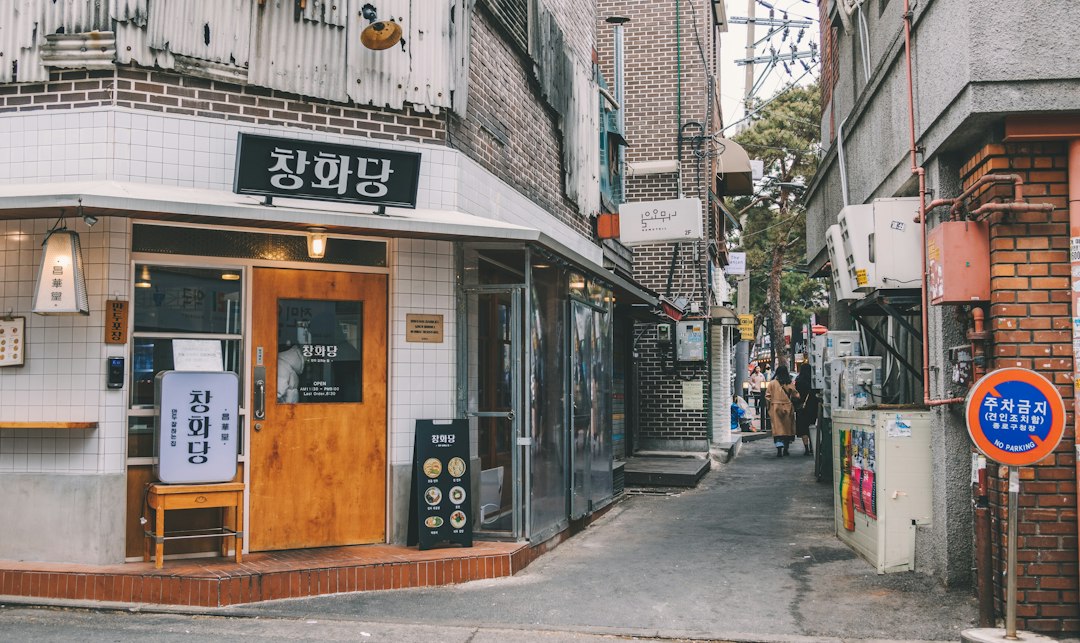
Cover image: Photo by Bundo Kim on Unsplash. Illustrative storefront photograph; not a current opening-hours notice.