Solo Dining in Seoul: Minimum Orders, Korean BBQ and Finding a Table
For solo dining in Seoul, check two things separately: whether the restaurant can seat one guest, and the minimum food order. A price marked “per portion” does not establish that you can order only one portion, while a two-portion minimum does not by itself explain the restaurant’s solo-seating policy.
Researched October 30, 2026. This guide explains how to find and confirm a suitable meal. It does not promise admission at individual restaurants or claim that a particular seating arrangement is always available.
Three questions to answer before you sit down
- Can one person eat here at this time? Ask about your actual arrival time or reservation, not a general policy from an old review.
- What is the minimum order? Establish the number of portions, any set menu and whether the rule applies per person, table or dish.
- What will the whole meal cost? Include mandatory extras and ask whether rice is included if the menu is unclear.
These checks are particularly useful for shared grills, hot pots and set meals. Ordering two portions can satisfy an order rule where the restaurant agrees, but it does not compel a restaurant to accept a single diner. If it cannot accommodate you, a nearby alternative is more useful than arguing about another traveller’s experience.
Read the menu units before comparing prices
| Korean | What it indicates | Question to ask |
|---|---|---|
| 1인 / 1인분 | One person / one portion | Can I order one portion on its own? |
| 2인분 이상 주문 | A minimum order of two portions | Can one guest order those portions? |
| 2인 이상 | A two-or-more-person condition | Does this require two diners, or describe the set/order size? |
| 1인 1메뉴 | One menu item per person | Which items qualify for the rule? |
| 소 / 중 / 대 | Small / medium / large | Is this the price for the whole shared dish? |
| 공기밥 별도 | Plain rice charged separately | What is the extra price if I want rice? |
| 1인석 / 혼밥 | One-person seating / eating alone | Does the information apply to my chosen dish and time? |
Illustrative arithmetic: meat at ₩16,000 per portion with a two-portion minimum starts at ₩32,000 before extras. That is different from a ₩16,000 individual meal. The amounts are invented to explain the calculation, not a current restaurant quote. Confirm the minimum and the total before the order is sent.
Match the meal to the kind of solo visit you want
| Meal format to look for | Why it is a useful starting point | Menu check |
|---|---|---|
| Gukbap or seolleongtang | An identifiable soup-and-rice order | Rice inclusion and any separately priced meat platter |
| Bibimbap or a rice bowl | A clearly listed bowl size and price | Optional toppings and whether a set is mandatory |
| Noodles or gimbap | A menu that can show individual items | Minimum-order rules and any meal-time restrictions |
| Individual BBQ set | A grill format explicitly offered for one | Total set price, meat amount and included side dishes |
For Myeongdong, Hongdae or Jongno, use the neighbourhood you will already be in rather than choosing the most distant recommendation. Save one individual-meal option for arrival day and a second option near your next activity. A menu photo is more useful when it shows both the dish and the order conditions.
Also check break time and last order. A solo-friendly restaurant can still be between services when you arrive.
Start with meals whose serving size you can understand
Look first at menus offering an individual bowl, plate or set: noodles, rice bowls, gimbap, soup with rice, or an explicitly labelled one-person meal. Check the actual menu; a restaurant may sell both individual dishes and larger sharing dishes.
KTO’s solo-travel feature in Bukchon describes the appeal of one-person meals and counter seating. Its named restaurant details are historical reporting, so use it as an example of the dining format rather than a current guarantee. The same principle applies when you see old recommendations on a forum.
Food courts can offer several individual-meal counters in one place. Check whether payment happens before seating, whether a tray must be returned and whether tables are shared across counters. A food court is an option to inspect, not proof that every outlet accepts every order or card.
A practical NAVER Map search workflow
- Choose the area where you will actually be. Search near your accommodation or next activity so that a meal does not become an unnecessary cross-city journey.
- Search the food plus the neighbourhood. Useful terms include 혼밥 (solo dining), 1인 식사 (one-person meal), 1인 고기 (one-person meat dining) and a specific dish such as 국밥 (soup with rice).
- Open the exact branch. Match its Korean name and address. A recommendation for one location does not establish another branch’s rules.
- Read recent menu photos and visitor reviews. Look for a clear individual meal, counter seating and reports about the dish you want.
- Check hours and ask if the policy remains unclear. Save a second nearby choice before leaving.
If a solo-dining keyword or filter appears in your version of the app, use it to narrow the shortlist. The location and availability of such controls can change. A review saying 혼밥하기 좋아요 (“good for eating alone”) is useful evidence of someone’s experience, not a binding current promise.
NAVER explains that visitor-review ordering can use recommendation and recency. Read the content and dates instead of treating the first displayed reviews as a complete picture. Our NAVER Map guide explains addresses and route setup.
How to approach Korean BBQ alone
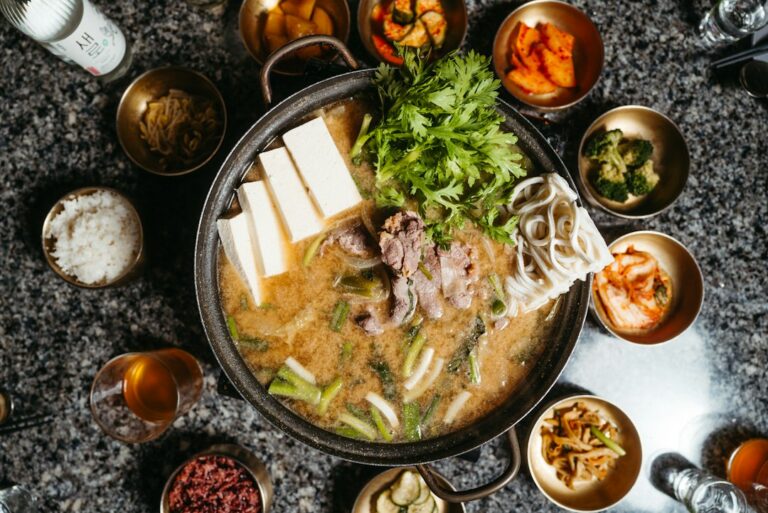
Search for an explicitly one-person grill or ask a regular BBQ restaurant whether it can seat you and what you must order. Confirm the meat quantity and price before accepting a table. A counter designed for individual grills may suit your preference, but check the menu and current operation rather than assuming every branch has that setup.
If the minimum is two portions, decide whether the cost and amount suit you. You can choose a different meal. Do not book for two diners and arrive alone as a workaround: the restaurant may allocate a table, ingredients or a set menu based on the declared party size.
For a restaurant you strongly want to visit, contact it before travelling across Seoul. A less busy time is something you can ask about, but it is not a guarantee of admission and may overlap a break between services.
Phrases to show at the entrance
| Use | Korean | English |
|---|---|---|
| Ask for a table | 혼자 왔는데 식사할 수 있나요? | I am here alone. Can I eat here? |
| Check one portion | 1인분만 주문할 수 있나요? | Can I order just one portion? |
| Ask about a minimum | 혼자 두 인분을 주문하면 식사할 수 있나요? | Can I eat here alone if I order two portions? |
| Clarify pricing | 이 가격은 1인분 가격인가요, 전체 가격인가요? | Is this the price per portion or for the whole dish? |
| Confirm the total | 추가 요금을 포함하면 총 얼마인가요? | What is the total including extra charges? |
| Leave politely | 알겠습니다. 감사합니다. | I understand. Thank you. |
You can show the written question if speaking feels difficult. Point to the specific menu item as you ask; “Can I eat alone?” does not identify which dish or order size you have in mind.
Fine dining and reservations for one
Use the restaurant’s own booking link and enter one guest. If no time appears, that can reflect availability or the channel’s party-size options; it does not by itself prove that the restaurant rejects all solo diners. Ask whether one-person counter seating or a different sitting is possible.
KTO’s CATCHTABLE Global guide describes email/Apple/Google signup without a Korean number, overseas-card deposit support and both reservations and waitlists. Those platform features do not guarantee a particular restaurant’s one-person availability. Check the selected menu, deposit, cancellation deadline and arrival instructions in our restaurant reservation guide.
A low-stress first solo meal
Before you get hungry, save two nearby choices with readable menus. At the first, ask the entrance question and minimum-order question. Order a meal you understand, keep any dietary question separate and establish where to pay. If it does not work, use the saved alternative. This is a practical routine, not a requirement to be fluent or familiar with restaurant customs.
For allergies, “not spicy” and “no meat” are not sufficient ingredient instructions. Use our food-allergy phrase guide or vegetarian and vegan ordering guide before confirming the order.
Frequently asked questions
Can I eat alone everywhere if I pay for two portions?
No. It may meet a food-order requirement if the restaurant agrees, but seating and service policies remain separate. Ask before ordering.
Will a soup or noodle restaurant always accept one diner?
A clearly priced individual dish is a useful starting point, but current seating, hours and menu conditions still need checking.
Do I need a Korean phone number to eat alone?
For a walk-in meal, the key issue is whether the restaurant can seat and serve you. A particular waitlist or reservation channel may have its own contact requirements. Check that channel rather than treating a phone number as a universal restaurant requirement.
Sources and related guidance
Sources checked October 30, 2026: the linked KTO solo-travel feature, KTO’s CATCHTABLE Global guidance and NAVER’s visitor-review documentation. Restaurant policies and app interfaces can change; no test reservations were made.
For general ordering, payment and portion wording, continue to How to Order at a Korean Restaurant.
Meal-planning guidance and internal links reviewed November 24, 2026.
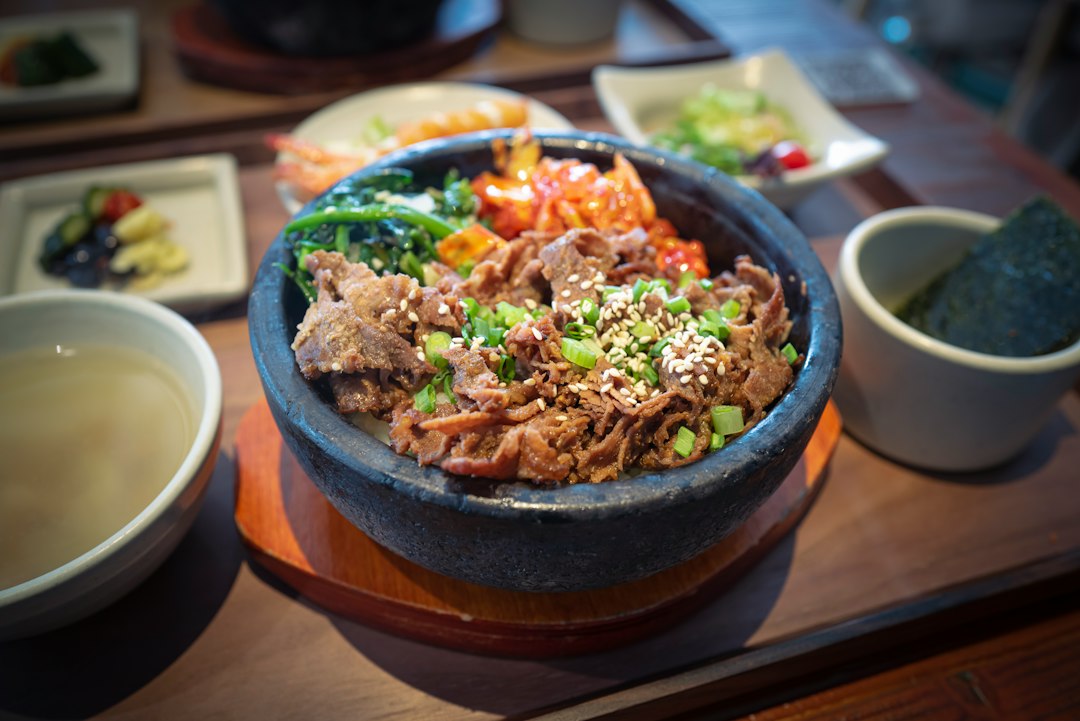
Cover image: Photo by Zhuojun Yu on Unsplash. Illustrative meal photograph; not a claim about a named restaurant’s solo-dining policy.