What to Eat in Busan: Local Dishes, Menu Words and Solo Dining
A useful Busan food plan starts with three decisions: do you want an individual bowl or a shared meal, which ingredients do you eat, and where will you already be sightseeing? That approach leaves room for local dishes without turning every meal into another trip across the city.
Start with pork-and-rice soup, wheat noodles or seafood according to your preferences. Add a street snack when you are hungry, rather than trying to complete a checklist in one afternoon. The guide below explains the menu words and ordering questions that make those choices easier.
Five foods to recognize
Visit Busan’s food guides introduce the following dishes. Their older food survey is useful background, but it is not evidence of current search popularity or a live restaurant ranking.
| Food and Korean name | What it is | Question before ordering |
|---|---|---|
| Dwaeji gukbap · 돼지국밥 | Pork soup served with rice. | Which cuts are in this version? |
| Milmyeon · 밀면 | Wheat noodles; menus distinguish broth and spicy mixed versions. | Mul or bibim, and is seasoning adjustable? |
| Nakgopsae · 낙곱새 | A spicy combination of octopus, beef intestine and shrimp. | What is the minimum order for our table? |
| Ssiat hotteok · 씨앗호떡 | A sweet filled pancake with seeds. | What is in the filling at this stall? |
| Hoe · 회 and cooked seafood | Sliced raw fish, or a cooked seafood meal selected separately. | Which species, serving size and preparation are included? |
These descriptions identify the dishes, not every restaurant’s recipe. If you have an ingredient restriction, use the Korean name of the ingredient and ask about the broth, sauce and garnish as well as the main item.
Read a pork-soup menu before choosing
Pork-soup menus can offer several versions that look similar in translation. Naejang (내장) means offal; sundae (순대) is Korean sausage. Ttaro gukbap (따로국밥) indicates rice served separately from the soup. Suyuk (수육) refers to boiled meat, while a suyuk baekban set pairs meat with a meal. Check the actual menu rather than assuming all bowls contain the same cuts.
If your main concern is avoiding offal, show 내장 없이 고기만 가능한가요? (“Can I have only meat, without offal?”). That is a request to confirm, not a promise that the restaurant will modify its dish. If you want to control the heat, ask whether the spicy seasoning can come separately before the bowl is prepared.
Can you eat alone in Busan?
Often the most useful clue is the order unit: an individual bowl is easier to evaluate than a shared platter. It still does not guarantee solo seating. Minimum orders, busy-period restrictions and the way an online booking system handles one person can differ by restaurant.
There is a concrete example in Visit Busan’s pork-soup feature: it describes a one-person set at Subyeon Choego’s Millak main branch, but notes an 11:00–13:00 solo-diner restriction at Hapcheon Gukbapjip. These are reported policies for those businesses, not rules for every gukbap restaurant. Recheck before making a special journey.
Use 혼자 식사 가능한가요? (“Can I dine alone?”) first, followed by 1인분 주문 가능한가요? (“Can I order one serving?”). A yes to the first question does not necessarily mean the smallest shared dish will fit one appetite.
Plan meals around your sightseeing area
| Your day’s area | Suggested meal strategy | Keep flexible |
|---|---|---|
| Nampo and Jagalchi | Choose one seafood meal or market snack stop. | Do not order a large lunch just before a second food market. |
| Seomyeon | Look for an individual soup or noodle meal near your onward route. | Compare opening and break times for the specific branch. |
| Haeundae | Eat near the beach before or after your booked coastal activity. | Leave a queue buffer before a Sky Capsule reservation. |
| Gwangalli and Millak | Choose dinner in the same area as your waterfront evening. | Check solo policies or shared portions before sitting down. |
This is an editorial way to arrange meals, not a claim that every neighborhood has identical restaurant choices. Use our Busan accommodation-area comparison to keep late dinners close to where you are staying.
A flexible food plan for two days
First day: choose one substantial meal, such as a pork-soup bowl if you eat pork, and leave space for a snack while exploring Nampo. A seafood dinner can be the day’s larger meal, but decide the full table budget before ordering. Do not treat every food stop as a full meal.
Second day: choose noodles or another individual lunch near your coastal activity. If you are travelling with companions who all want nakgopsae, make that the shared dinner and confirm the minimum servings. If you are alone or do not eat its ingredients, choose another dish without trying to force the same route.
A two-day plan does not need five famous restaurant names. One suitable restaurant and one nearby backup for each main meal are more useful than a long list spread across Busan. Save the branch, last-order time and Korean dish name, especially when a reservation elsewhere fixes your afternoon.
How to compare cost without a misleading daily budget
Compare individual meals using the displayed dish price and required extras. Compare seafood or shared pots using the total for your party. For example, a quoted price “per serving” may need to be multiplied by a minimum number of servings; a seafood price by weight needs the chosen quantity and preparation charges.
Before paying for a booking voucher, check whether it buys a specific dish, a spending credit or admission to an experience. These products are not interchangeable. For restaurant break times, see our Korean restaurant hours and last-order guide.
Useful questions at the table
- 몇 인분부터 주문 가능한가요? What is the minimum number of servings?
- 밥이 포함되어 있나요? Is rice included?
- 양념을 따로 주실 수 있나요? Can you serve the seasoning separately?
- 이 메뉴에 돼지고기가 들어가나요? Does this dish contain pork?
For fish-cake snacks and hotteok, our eomuk ordering guide and hotteok guide explain the broader food types. This Busan article is intended to help you choose a meal and place it in your day.
Sources and update notes
- Visit Busan: Delicious Busan, dish descriptions and 2020 survey context
- Visit Busan: pork-soup restaurants and reported solo-dining policies
- Visit Busan: Hapcheon Gukbapjip menu terminology
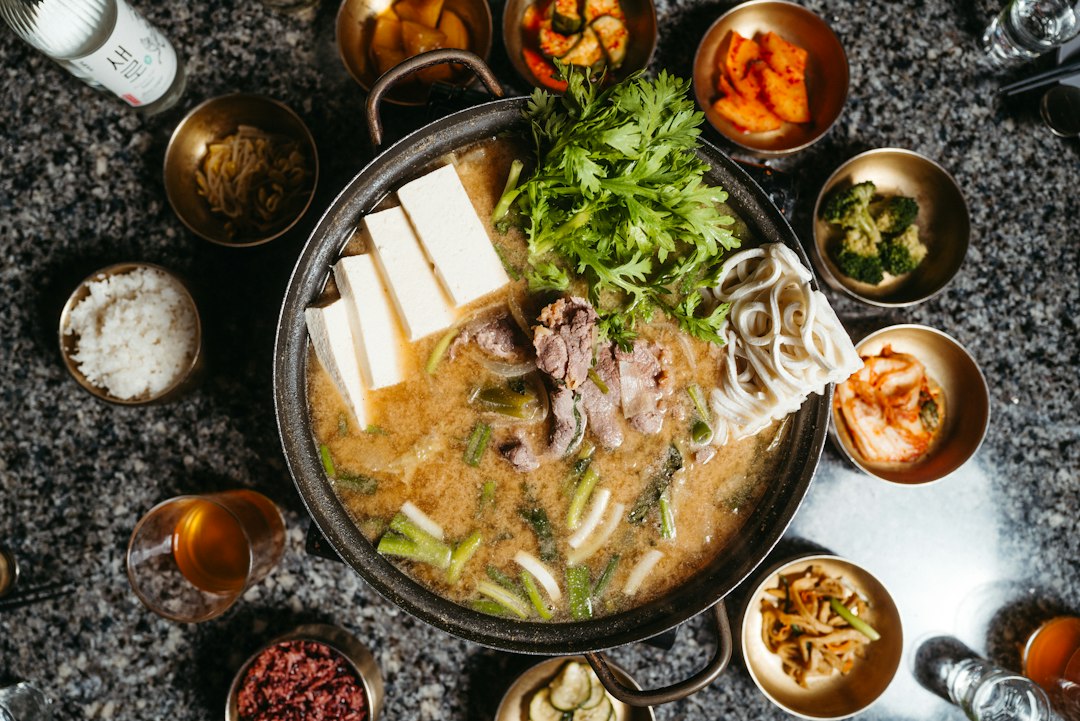
Sources checked November 24, 2026. The meal plans are editorial suggestions; this is not a first-person tasting review. Restaurant policies can change. Cover: a Korean meal photographed by Daniel / Unsplash, used as a general food illustration, not a photograph of a named Busan restaurant or a specific dish recommended above.
Choose the next guide by your meal plan
For a seafood purchase followed by preparation, use the Jagalchi ordering and total-cost checklist. For a Saturday dinner near the coast, pair the meal with the Gwangalli drone-show guide only after checking the day’s performance notice. These are separate western and eastern outings; do not rush between Jagalchi and Gwangalli simply to complete a food list.