Han River Ramen in Seoul 2026: How to Cook It, What to Order & How to Pay
Last verified: October 10, 2026 · Primary sources: Seoul Future Hangang Headquarters, Korea Tourism Organization (VISITKOREA), Seoul Metropolitan Government, Tmoney, and official noodle-brand product pages. Store hours, product selection and prices vary by location.
Hangang ramen (한강라면) is one of Seoul’s simplest local experiences: buy a packet of Korean ramyeon from a convenience store inside Hangang Park, cook it in the store’s dedicated ramyeon cooker, then eat it outside with a view of the Han River.
Korea Tourism Organization describes it as “Hangang Riverside Convenience Store Ramyeon” and explains that it is different from ordinary cup noodles: you buy a packet of ramyeon at a Hangang riverside convenience store, place the noodles and seasoning in the cooking container, add water and let the dedicated cooker finish the job. KTO says this is available at most convenience stores in Hangang River Park, although availability and business hours depend on the store.
Seoul’s Future Hangang Headquarters also treats Hangang ramen as part of the river’s leisure culture. Its official cultural archive says instant-ramyeon cookers began appearing in park convenience stores around 2011, after which Hangang ramen spread by word of mouth and became something people commonly eat when visiting the river.
What exactly counts as “Hangang ramen”?
You can obviously buy and cook instant noodles anywhere in Korea. But when Koreans say “Hangang ramen”, they normally mean the specific Hangang Park convenience-store experience: packet noodles + dedicated cooking container + an automatic cooker + eating by the river.
So if you want the classic experience, do not just buy cup noodles at a random convenience store near your hotel. Go into a convenience store inside one of Seoul’s Hangang parks and check whether it has the self-cooking ramyeon station. KTO’s official guidance says most Hangang Park convenience stores offer this, but not every store is guaranteed to have the same setup.
How to make Hangang ramen: step by step
- Choose a packet of ramyeon. Look for bagged noodles rather than a cup noodle.
- Take it to the counter. Tell the cashier you want to cook it at the ramyeon station if the store’s process is not obvious.
- Get the cooking container. Stores with the Hangang-ramen setup provide a heat-safe disposable bowl/container designed for the cooker.
- Add noodles and seasoning. Follow the packet style and the instructions shown at the machine.
- Use the cooker. Depending on the machine, the process may be button-based or preset by noodle type. KTO notes that the machine controls the water and cooking process for the selected ramyeon.
- Add an egg if you want. KTO specifically mentions raw egg as a popular add-on.
- Take it outside and eat by the river. Use the park’s tables, seating areas or picnic spaces, then dispose of the bowl at the designated waste area.
Useful Korean: 라면 (ramyeon), 계란 (egg), 치즈 (cheese), 조리 (cook), 시작 (start), 취소 (cancel).
How much does Hangang ramen cost?
There is no single official citywide price. Seoul and KTO explain the experience but do not publish one fixed Hangang-ramen price because convenience stores are separately operated and prices can differ by product, park, promotion and toppings.
For trip planning, current 2026 local price guides commonly place a cooked Hangang-ramen set at roughly KRW 4,000–4,500 before extras at popular parks such as Ttukseom. Treat that only as a practical estimate, not an official tariff. Check the shelf or cashier price at the exact store you visit.
Egg, cheese, kimchi, drinks and triangle kimbap are normally separate purchases.
How can a foreign visitor pay?
This is easier than many first-time visitors expect. Korea Tourism Organization’s current shopping guide says that most Korean stores accept major international credit cards, including Visa, Mastercard, JCB, American Express and UnionPay. That means an internationally issued physical Visa or Mastercard is usually the simplest way to pay at a Hangang Park convenience store.
| Payment method | What a foreign visitor should know |
|---|---|
| International credit/debit card | Best first choice. KTO says major international cards are accepted at most Korean stores. Individual terminals or issuers can still fail, so have a backup. |
| Tmoney | Tmoney’s official guidance says Tmoney can be used at participating convenience stores including major chains such as GS25, CU, 7-Eleven and emart24. Look for the Tmoney logo or ask the cashier. |
| WOWPASS / tourist prepaid card | Useful where the merchant accepts the relevant card network. KTO promotes WOWPASS as a foreigner-oriented payment option, but acceptance still depends on the store. |
| Cash | A small amount of Korean won is a useful backup if a foreign card is declined. |
Important: do not assume the ramyeon cooker itself accepts your card. In the usual setup described by KTO, you buy the ramyeon from the convenience store and then use the cooking station. The exact checkout/cooker workflow varies by store, so follow the instructions at that location.
If you are unsure, ask: “카드 돼요?” (Kadeu dwaeyo? / Can I pay by card?) or show your card to the cashier.
Which ramyeon should you choose?
| Product | Brand | Flavor guide for visitors |
|---|---|---|
| Shin Ramyun (신라면) | Nongshim | Classic spicy Korean soup ramyeon. Bold, savory and noticeably hot for people who are not used to Korean spice. |
| Jin Ramen Mild (진라면 순한맛) | Otoki | Milder soup with a gentler level of heat. A safer first choice if you are spice-sensitive. |
| Jin Ramen Spicy (진라면 매운맛) | Otoki | Spicier than the Mild version, with a rich Korean-style broth. |
| Neoguri (너구리) | Nongshim | Thick noodles with a seafood-and-kelp style broth. |
| Chapagetti (짜파게티) | Nongshim | Brothless black-bean-style noodles: savory, nutty and slightly sweet rather than spicy. |
| Jjajjaroni (짜짜로니) | Samyang | Black-bean noodles with a liquid sauce. Samyang highlights its smooth liquid sauce and roasted chunjang-style flavor. |
| Jin Jjajang (진짜장) | Otoki | Otoki describes it as smoky black-bean sauce with thick, chewy noodles. |
| Jjawang (짜왕) | Nongshim | A premium-style jjajang ramyeon with thicker noodles and a deeper roasted black-bean flavor. |
Jjajang-style noodles: Chapagetti vs Jjajjaroni vs Jin Jjajang vs Jjawang
If you do not want spicy soup, Korean jjajang-style instant noodles are a good alternative. These are dark, sauce-based noodles inspired by Korean-Chinese jajangmyeon. They are usually drained or cooked with less water, so check whether the Hangang Park cooker has an appropriate mode and follow the store instructions.
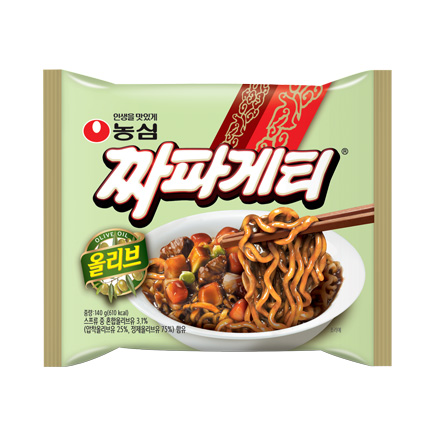
Nongshim
Chapagetti (짜파게티)
The most internationally recognizable Korean jjajang-style instant noodle. Nongshim describes the line around a rich, nutty black-bean flavor. Best for first-time visitors who want the benchmark.
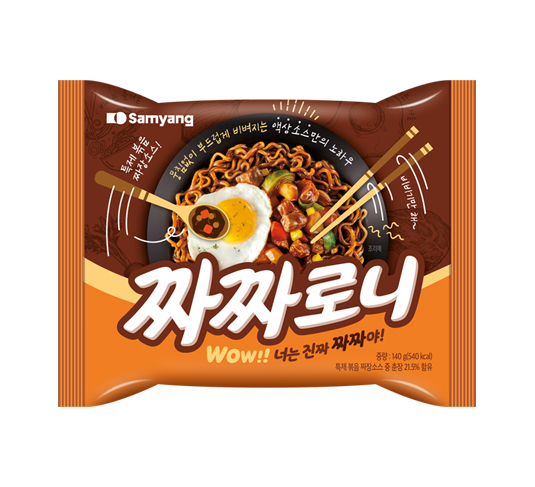
Samyang
Jjajjaroni (짜짜로니)
Samyang’s official page emphasizes its liquid sauce and roasted chunjang character. It tends to feel more sauce-forward and closer to a glossy Korean-Chinese jjajang profile.
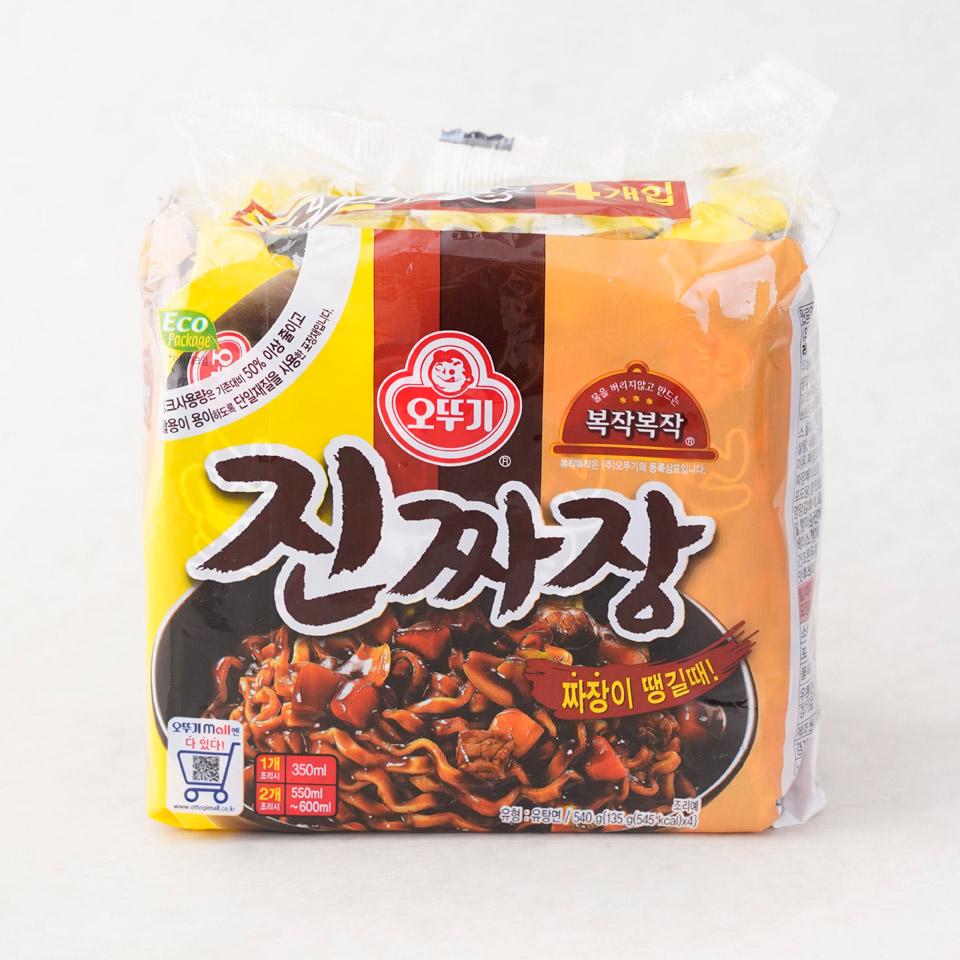
Otoki
Jin Jjajang (진짜장)
Otoki’s official English product page describes a smoky black-bean sauce with chewy, thick noodles. Good if you want a heavier, more substantial texture.
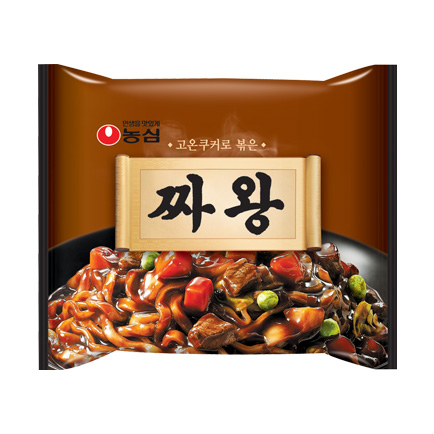
Nongshim
Jjawang (짜왕)
Nongshim presents Jjawang as a premium jjajang ramyeon with thick, chewy noodles, generous toppings and a deep roasted sauce flavor.
Product package images are provided for recognition; packaging and in-store availability can change. Brand names and trademarks belong to their respective owners.
Best toppings and combinations
A raw egg is the most classic add-on and is specifically mentioned by Korea Tourism Organization. Depending on the convenience store, you may also find sliced cheese, sausage, kimchi, triangle kimbap, drinks or other picnic food.
| If you want… | Try… |
|---|---|
| A classic first Hangang ramen | Shin Ramyun + egg |
| Less spicy | Jin Ramen Mild + egg |
| No soup / black-bean flavor | Chapagetti or Jjajjaroni |
| A fuller meal | Ramyeon + triangle kimbap + drink |
| A Korean picnic-style meal | Ramyeon + fried chicken + drink |
Best Hangang parks for the experience
1. Yeouido Hangang Park
Best for: first-time visitors, broad lawns, easy picnic atmosphere and seasonal events.
2. Ttukseom Hangang Park
Best for: river views, young local atmosphere, seasonal drone shows and easy access from Jayang (Ttukseom Hangang Park) Station.
3. Banpo Hangang Park
Best for: evening visits, Banpo Bridge views and seasonal Moonlight Rainbow Fountain trips.
4. Mangwon Hangang Park
Best for: combining the river with Mangwon Market or the Mangwon/Hapjeong area.
How to find a Hangang-ramen convenience store
In NAVER Map, Korean search terms are often the easiest: 한강공원 편의점, 여의도한강공원 편의점, 뚝섬한강공원 편의점, 반포한강공원 편의점, 망원한강공원 편의점, or simply 한강라면.
In Google Maps, try “convenience store + [park name]”, for example “convenience store Yeouido Hangang Park.” Then check recent photos/reviews for the ramyeon cookers.
Because KTO states that availability and opening hours vary by store, checking the exact store shortly before you go is better than relying on an old blog list.
Can you do Hangang ramen alone?
Yes. You are simply buying food from a convenience store and eating in a public park. Solo visitors, couples, families and groups all use Hangang Park. There is no requirement to order multiple portions.
When is the best time?
For atmosphere, arrive around 30–60 minutes before sunset, buy your food before the busiest evening period and eat as the river lights come on. Spring and autumn are the most comfortable seasons. Summer afternoons can be hot and humid, while winter evenings can be very cold and windy beside the river.
Can children eat Hangang ramen?
Yes, but the cooking station and container become very hot. Adults should handle the cooker for young children. For spice-sensitive children, choose a mild noodle and check the ingredient label.
Vegetarian, halal and allergy questions
Do not assume a noodle is vegetarian, halal or free from a particular allergen based only on its flavor name. Soup powders and sauces can contain meat, seafood, dairy or other ingredients. Check the current Korean package label or the manufacturer’s official product information for the exact product you are buying.
Frequently asked questions
Is Hangang ramen a special brand?
No. It is the experience of cooking packet ramyeon at a Hangang Park convenience store with a dedicated cooker.
Can I buy ramen outside the park and bring it in?
You can bring food into Hangang Park subject to park rules, but for the classic Hangang ramen experience — and to use the store’s cooker/container system — buy the ramyeon from the participating convenience store inside the park and follow that store’s process.
Do all Hangang Park convenience stores have ramen cookers?
No guarantee. Korea Tourism Organization says the experience is available at most convenience stores in Hangang River Park and that availability and business hours depend on the store.
Can I use a foreign credit card?
Usually yes. KTO says major international cards are accepted at most Korean stores. Carry a second card or some Korean won as a backup.
Can I pay with Tmoney?
At participating convenience stores, yes. Tmoney’s official guide says major convenience-store chains accept Tmoney, but individual merchant acceptance can vary. Look for the Tmoney logo or ask the cashier.
Is Hangang ramen spicy?
Only if you choose a spicy product. Jin Ramen Mild or jjajang-style noodles such as Chapagetti are easier choices for visitors who do not enjoy heat.
Related Korea Practical Guide articles
- NAVER Map in Korea: How to Use It
- Coin Noraebang in Korea: Prices & How to Use It
- T-money vs Climate Card vs WOWPASS
- Seoul Events Calendar
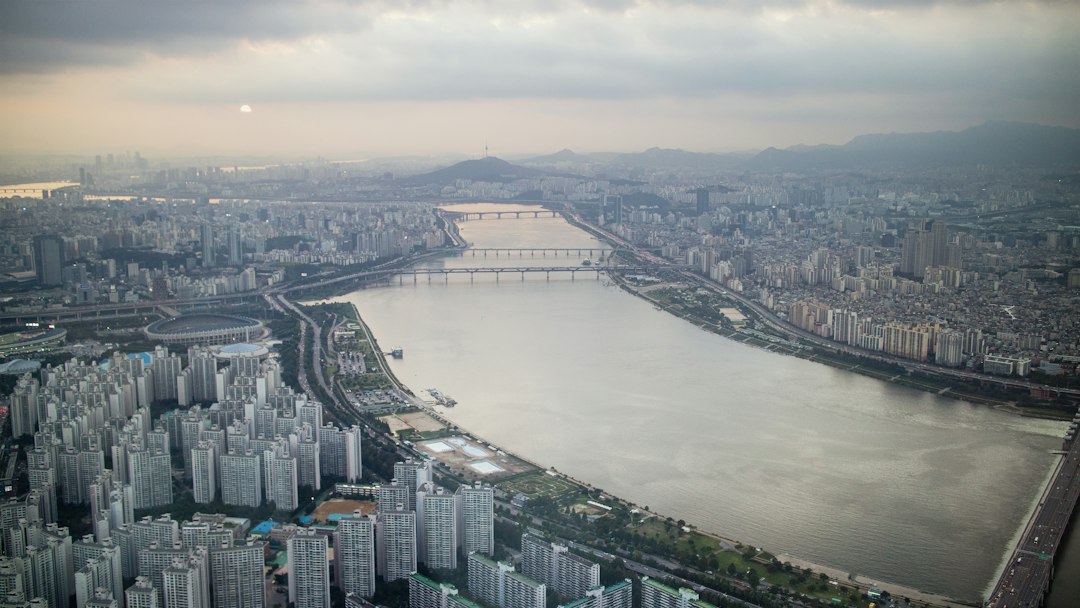
Featured photo: JEONGUK – / Unsplash. The photo shows the Han River setting and is illustrative.
Primary and reference sources
- Seoul Future Hangang Headquarters — Hangang convenience-store ramen cultural archive
- Korea Tourism Organization — “Hangang Riverside Convenience Store Ramyeon”
- Seoul Metropolitan Government — Convenience Store Ramen and Ttareungi at Hangang Park
- Korea Tourism Organization — Shopping and international card payment guidance
- Tmoney — Convenience-store payment guide for foreign travelers
- Nongshim — Chapagetti official product page
- Samyang Foods — Jjajjaroni official product page
- Otoki — Jin Jjajang official product page
- Nongshim — Jjawang product introduction
Korea Practical Guide is an independent information website and is not affiliated with Seoul Metropolitan Government, Korea Tourism Organization, Tmoney, Nongshim, Samyang Foods, Otoki, Google, NAVER or any convenience-store operator.