T-money vs Climate Card vs WOWPASS in Korea (2026): Prices, Differences & Which to Choose
Last verified: October 10, 2026 · Source basis: Korea Tourism Organization, Seoul Metropolitan Government, Tmoney and WOWPASS official information
If you are visiting South Korea, the three cards you are most likely to hear about are T-money, the Seoul Climate Card, and WOWPASS. They overlap, but they are not designed for the same traveler.
The simplest way to think about them is this:
- T-money: the most flexible pay-as-you-go transport card for travel around Korea.
- Climate Card: an unlimited short-term transit pass mainly for travelers moving frequently inside Seoul.
- WOWPASS: a foreigner-focused prepaid payment and currency-exchange card with a built-in T-money transport function.
There is no single “best” card. The right choice depends on whether you are staying only in Seoul, traveling to other cities, taking public transportation many times per day, or also want a Korean prepaid payment card.
Quick comparison: T-money vs Climate Card vs WOWPASS
| Feature | T-money | Climate Card | WOWPASS |
|---|---|---|---|
| Main purpose | Pay-as-you-go transportation | Unlimited Seoul public transport for a fixed period | Prepaid shopping + currency exchange + T-money transport |
| Best for | Flexible travel across Korea | Heavy transit use in Seoul | International visitors who want one card for shopping and transport |
| Card cost | Usually KRW 3,000–5,000 | Physical card KRW 3,000 + pass price | Current official sales channels commonly show about KRW 5,500–6,000; promotions can vary |
| Transport charging | Pay per ride | Unlimited within eligible network for pass duration | Built-in T-money balance, pay per ride |
| Where it works | Public transport across much of Korea | Eligible Seoul transit network | T-money function for public transport + WOWPASS payment balance for shopping |
| Shopping payments | Some affiliated merchants | No general shopping-wallet function | Yes, at Korean merchants that accept local card payments |
| Currency exchange | No | No | Yes |
| Foreign-card-friendly top-up | Standard tourist use still often requires KRW cash | Some newer Seoul machines support international cards for short-term passes | WOWPASS balance can be topped up by supported foreign cards/e-wallets or foreign-currency cash; T-money balance is separate |
1. T-money: the safest default for most travelers
T-money is Korea’s best-known rechargeable transportation card. The Korea Tourism Organization lists it as a general prepaid card available at convenience stores nationwide and at many subway station service points. A standard card usually costs around KRW 3,000–5,000, before adding transit value.
What can you use T-money for?
For tourists, the main benefit is transportation. You can use T-money on:
- Subways
- City buses
- Many taxis
- Other participating public-transport services
T-money is especially useful because it works far beyond central Seoul. If your trip includes Seoul plus places such as Busan, Incheon, Suwon, Daegu or other Korean cities, a general transportation card is usually easier than relying only on a Seoul-specific pass.
T-money also supports transfer discounts when you tap correctly on eligible buses and subway systems. On buses, remember to tap when you get off.
How much does T-money cost?
The Korea Tourism Organization currently lists the general card itself at around KRW 3,000–5,000. You then add money for transportation. Your balance decreases each time you travel.
For a typical international visitor, it is smart to keep some Korean won cash because standard T-money purchase and recharge may not accept a foreign-issued credit card at many convenience stores and traditional top-up machines.
Who should choose T-money?
- You will travel outside Seoul.
- You are not sure how many transit rides you will take each day.
- You want the simplest transport card with broad coverage.
- You do not need a separate Korean prepaid shopping card.
- You want a useful backup even if you also buy another tourist pass.
2. Seoul Climate Card: best for frequent transit inside Seoul
The Climate Card is fundamentally different from T-money. Instead of charging you for each ride, the tourist short-term pass offers unlimited eligible public-transport rides during a fixed period.
As of October 2026, the Seoul Metropolitan Government lists the following short-term passes:
| Pass | Price |
|---|---|
| 1-day | KRW 5,000 |
| 2-day | KRW 8,000 |
| 3-day | KRW 10,000 |
| 5-day | KRW 15,000 |
| 7-day | KRW 20,000 |
If you use a physical card, the card itself costs KRW 3,000 in addition to the pass.
Important 2026 change
The Korea Tourism Organization’s transportation-card guide updated in August 2026 notes that the tourist Climate Card is now focused on the Seoul service area, and that the previous 30-day Climate Card structure changed in October 2026. For short-stay travelers, the 1-, 2-, 3-, 5- and 7-day tourist passes are the relevant options.
When is the Climate Card worth it?
The Climate Card becomes attractive when you expect to use Seoul’s public transportation repeatedly every day. Seoul originally introduced the tourist pass for visitors who might use public transport around two to three or more times per day, although your actual savings depend on your routes.
It is especially convenient if you do not want to think about your remaining transport balance every time you board.
Important airport limitation
Do not assume the Climate Card is your airport-arrival card. Seoul’s current guidance specifically notes restrictions on boarding the AREX at Incheon Airport Terminals 1 and 2 with the Climate Card. For your arrival from Incheon Airport into Seoul, use an appropriate AREX ticket, airport bus, taxi, T-money or another supported method.
Who should choose the Climate Card?
- You are staying mainly inside Seoul.
- You plan to use subway and buses several times every day.
- You want predictable transportation spending.
- You have a 1-, 2-, 3-, 5- or 7-day Seoul itinerary.
- Your planned stations and bus routes are inside the covered network.
3. WOWPASS: payment card + currency exchange + T-money in one card
WOWPASS is designed specifically for international visitors. It is not simply another transit pass. It combines a Korean prepaid shopping balance, foreign-currency exchange/top-up features, and a built-in T-money transportation function.
The Korea Tourism Organization describes WOWPASS as an all-in-one card for foreign travelers, and the official WOWPASS service says travelers can use its prepaid balance at Korean merchants that accept local credit or debit cards.
How much does WOWPASS cost?
WOWPASS pricing can vary by purchase channel and promotion. As of October 2026, the official WOWPASS sales pages commonly show a standard card price around KRW 6,000, with some channels offering promotional pricing around KRW 5,500. Check the current price at the actual kiosk, airport pickup point or official reservation page you plan to use.
The most important thing to understand: there are two balances
This is where many first-time users get confused.
The WOWPASS shopping balance and the T-money transportation balance are separate.
- The WOWPASS balance is used when you insert the card into a payment terminal at shops, restaurants and other merchants.
- The T-money balance is used when you tap the card on subway gates, buses and other supported public transportation.
Adding money to your WOWPASS shopping balance does not automatically mean you have enough T-money transit balance. The official WOWPASS guide explicitly says the T-money balance must be charged separately.
Why travelers like WOWPASS
- It can function as a local-style prepaid payment card.
- It supports top-up using supported foreign cards, e-wallets or foreign-currency cash.
- You can manage payment history and balances in the app.
- It includes T-money, so you do not necessarily need a separate transport card.
- Cash withdrawal is available at WOWPASS machines, subject to current fees and limits.
- The app offers loss-protection features after the card is registered.
Who should choose WOWPASS?
- You want one physical card for shopping and public transport.
- Your international credit card is inconvenient or sometimes rejected in Korea.
- You want to exchange or preload money into Korean won.
- You want app-based balance management.
- You are traveling in multiple Korean cities and still want a general T-money transport function.
Which card should you choose?
| Your travel style | Best choice | Why |
|---|---|---|
| First trip to Korea, multiple cities | T-money | Simple, flexible and broadly useful |
| 3–7 days mainly in Seoul with frequent transit | Climate Card | Unlimited eligible rides can be easier and potentially cheaper |
| Shopping-heavy trip + transport + currency exchange | WOWPASS | Combines prepaid payments with built-in T-money |
| Only a few rides each day in Seoul | T-money | Pay only for what you use |
| You do not want to carry much KRW cash for shopping | WOWPASS | Foreign-currency and card-based top-up options |
| Very transit-heavy Seoul itinerary | Climate Card | Fixed-price unlimited usage within the covered network |
Can you use more than one?
Yes, and for some travelers that is the best setup.
For example, you could use a Climate Card for unlimited Seoul transit during the middle of your trip, while keeping a small T-money or WOWPASS T-money balance for airport transport or travel outside the Climate Card coverage area.
You could also use WOWPASS for payments while using a Climate Card for Seoul transportation. Because the WOWPASS payment balance and T-money balance are separate anyway, there is no rule that says one card must handle every part of your trip.
My practical recommendation
If you want the least complicated option, start with T-money.
If you know you will stay almost entirely in Seoul and use buses and subways repeatedly, compare your itinerary against the Climate Card.
If you want help with both Korean payments and transportation, especially if you prefer to preload travel money instead of relying on your foreign credit card everywhere, consider WOWPASS.
Frequently asked questions
Is WOWPASS the same as T-money?
No. WOWPASS is a broader foreigner-focused prepaid payment card. It contains a T-money transportation function, but its WOWPASS payment balance and T-money transport balance are separate.
Is the Climate Card valid everywhere in Korea?
No. It is a Seoul-focused unlimited transport pass. If you are traveling outside the covered network, T-money or the T-money function inside WOWPASS is usually more flexible.
Do I need both T-money and WOWPASS?
Usually not. WOWPASS already includes a T-money function. However, you may still choose to keep a separate T-money card if you prefer to separate transportation spending.
Can I use the Climate Card from Incheon Airport into Seoul?
Do not depend on it for airport boarding. Current Seoul guidance includes restrictions on using the Climate Card to board the AREX at Incheon Airport Terminal 1 and Terminal 2.
Which card is best for a one-week Seoul trip?
If you expect frequent subway and bus use every day, the 7-day Climate Card is worth comparing. If your itinerary includes fewer transit rides or many destinations outside Seoul, T-money may be simpler.
Related Korea Practical Guide articles
- T-money Card in Korea: How to Buy and Use It
- Seoul Climate Card Tourist Pass 2026
- Incheon Airport to Seoul: AREX vs Bus vs Taxi
- Naver Map in Korea: Why Travelers Still Need It
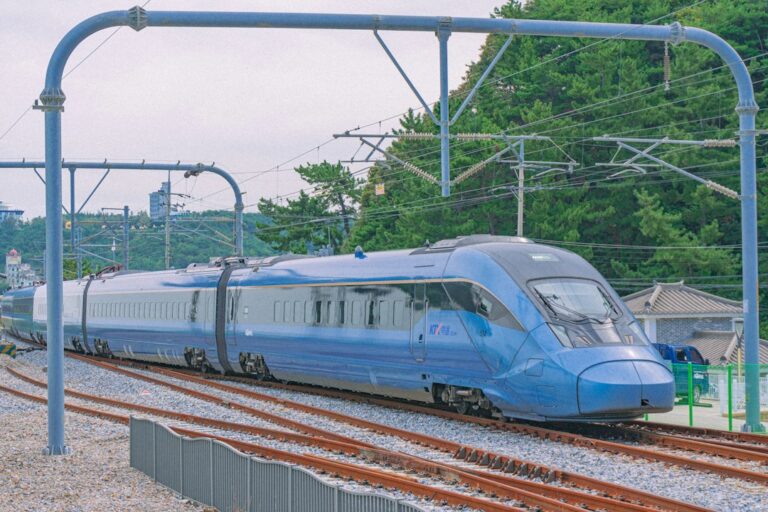
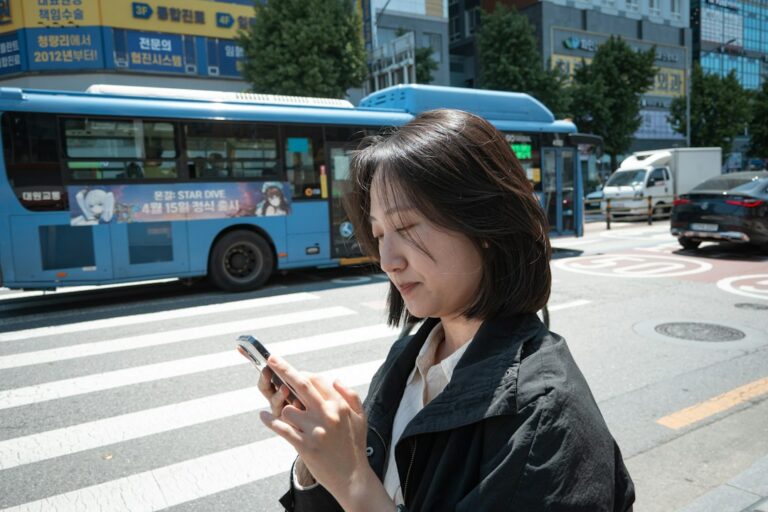
Featured photo: KS KYUNG / Unsplash. The image is illustrative.
Primary and official sources
- Korea Tourism Organization — Transportation Cards
- Seoul Metropolitan Government — Climate Card
- Korea Tourism Organization — 2026 Transportation Guide
- WOWPASS — Official Usage Guide
Korea Practical Guide is an independent information website. It is not affiliated with Tmoney, WOWPASS, Seoul Metropolitan Government or the Korea Tourism Organization.